THE ALBARELLO
A jar with a waist
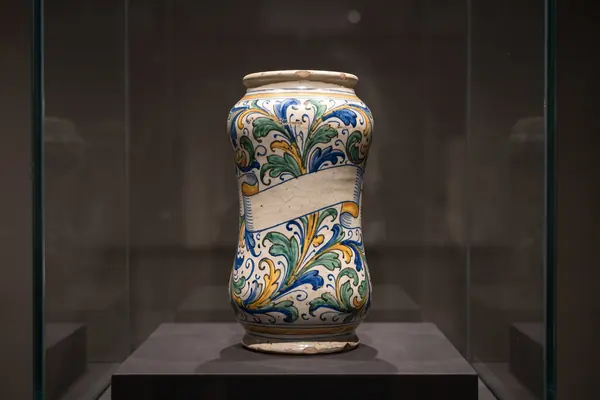
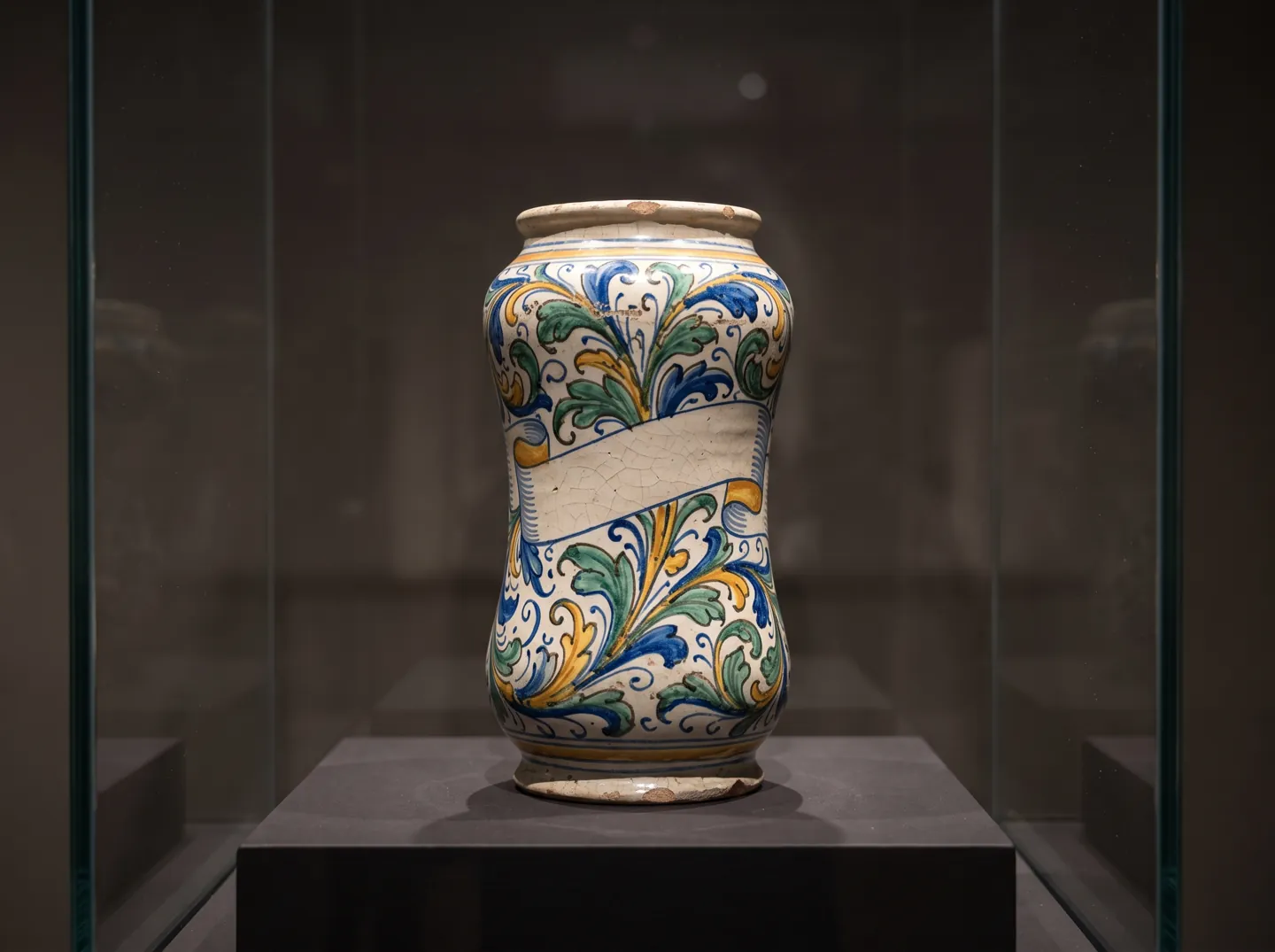
The V&A describes the albarello as a tall jar for dry preparations, with a slim waist that could easily be grasped on the shelf.
Read a jar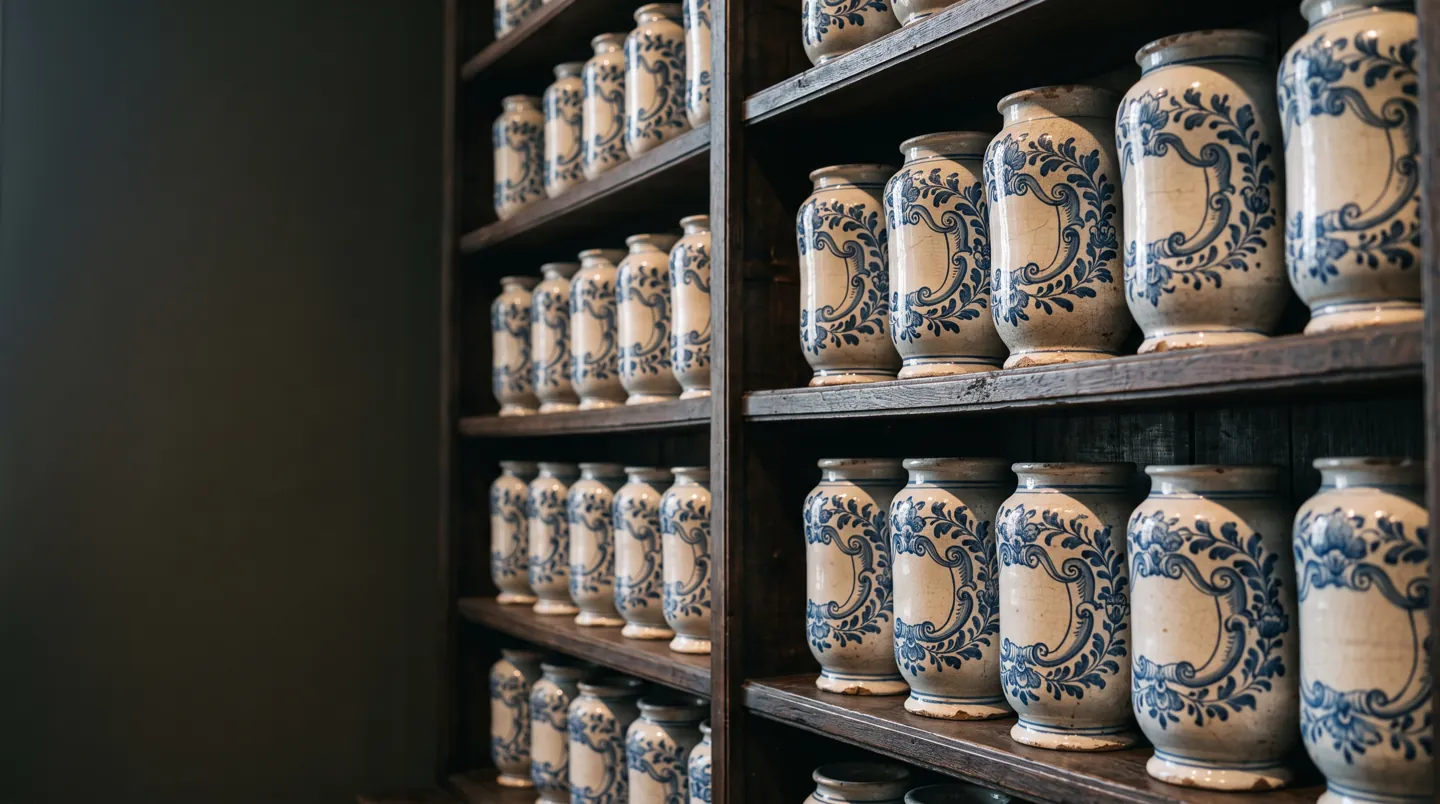
 doodledrug
AN INDEPENDENT MUSEUM GUIDE
TWO SHAPES one for dry, one for wet
Old pharmacies were lined with painted pottery.
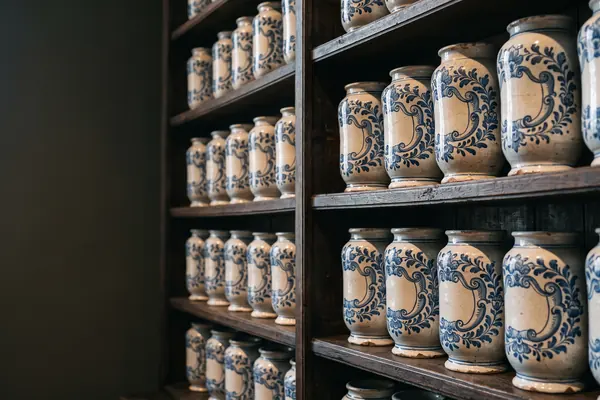
For centuries apothecaries stored their stock in tin-glazed earthenware jars, often with the contents painted on a scroll. Today these drug jars sit in museum cases, and their shapes and lettering tell you how a shop once worked.
Updated
Read a jarTHE SHORT ANSWER
A drug jar had two jobs:
to be picked up easily, and to show what was inside.
THE ALBARELLO
The V&A describes the albarello as a tall jar for dry preparations, with a slim waist that could easily be grasped on the shelf.
Read a jarTHE WET JAR
Jars for 'wet' drugs such as syrups had a narrow foot to pull them from a row, a handle to tilt them and a spout to pour.
How they were madeTHE WINDOW
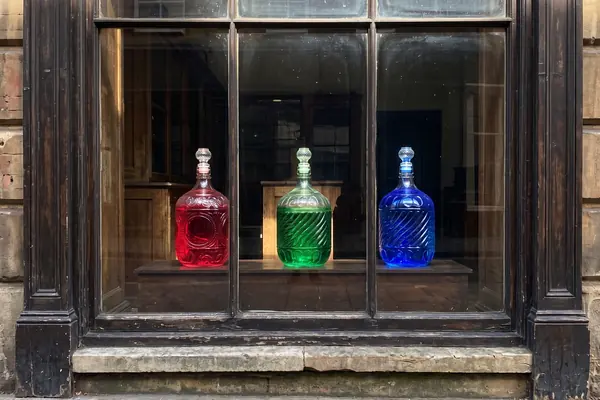
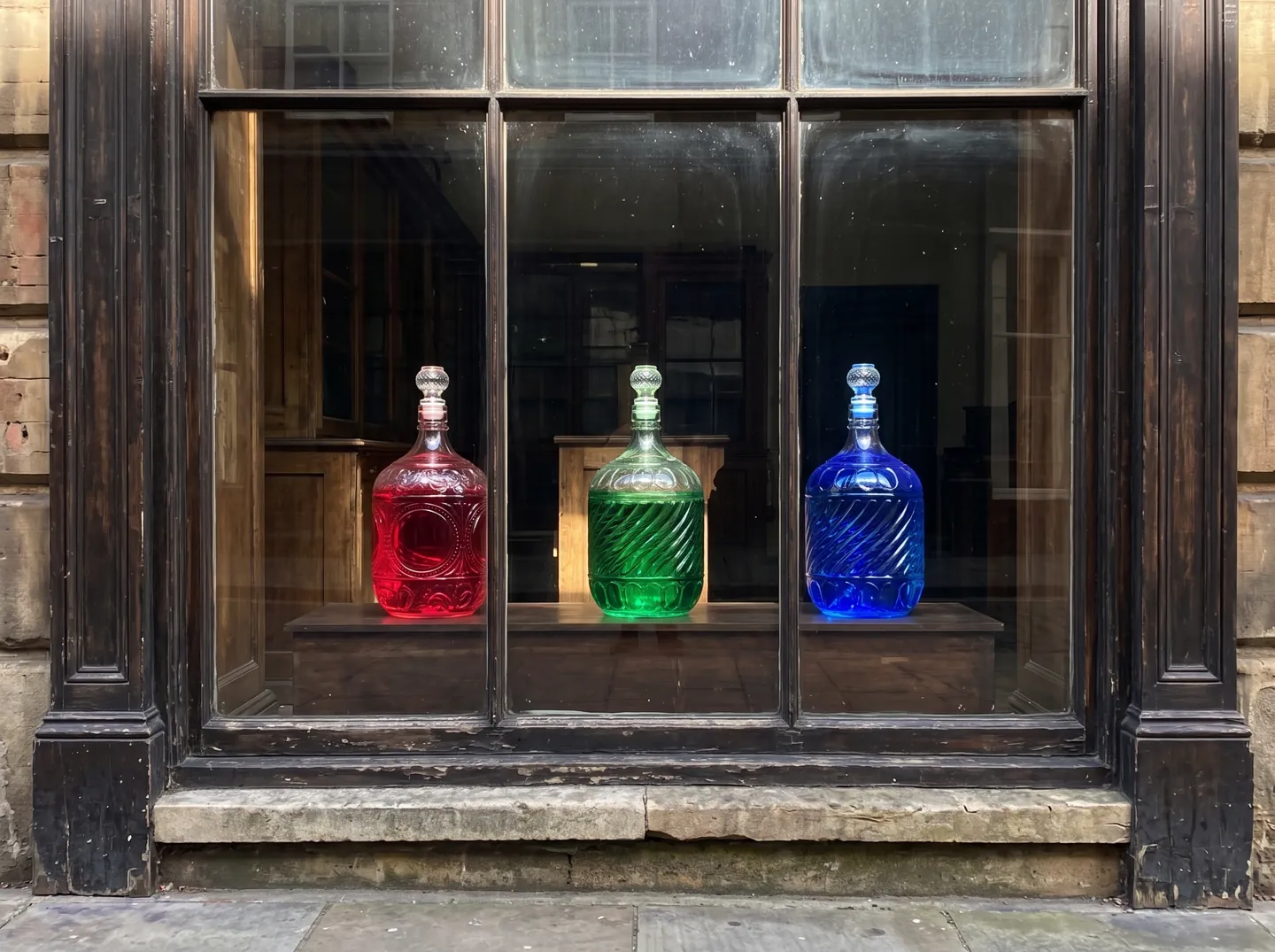
Big glass vessels filled with coloured water stood in chemists' windows to advertise the trade inside, much like a barber's pole.
See the datesREAD A JAR
Pick an object from a museum collection to see what it is and how it is marked. The bar shows how clearly the object names what it held.
Objects described from the V&A collections database, The Pharmaceutical Journal's RPS museum treasures series and the Dittrick Medical History Center.
TWO NUMBERS WORTH KNOWING
One date for the oldest jar here,
one count of the shapes England made.
1435–1475
Date range of the Valencia albarello
A tin-glazed earthenware drug jar painted in cobalt blue and lustre, made in Valencia, Spain. A similar jar with the same apothecary's symbol is in the Louvre.
OLDEST HERE · V&A
2 types
Standard drug jar types made in England
The albarello for dry preparations and the footed jar for wet drugs. The V&A says both were made continuously in England from the late 16th century.
ENGLISH DELFTWARE · V&A
The V&A says that by 1800 delftware had given way to Staffordshire pearlware, that some Derbyshire brown stoneware drug pots followed by the 1830s, and that labelled glass bottles gradually took over during the 19th century.
FOUR THINGS TO LOOK FOR
These clues come from the way the V&A catalogues its drug jars. They help you tell what a jar was for and roughly where it came from.
A slim waist means an albarello for dry stock; a foot, handle and spout mean a jar for syrups and other wet preparations.
Look for a painted scroll or riband. It may carry an abbreviated Latin name, an apothecary's mark, or nothing at all.
Flanges on the rim let a paper or parchment cover be tied on, which is how jars were sealed.
The V&A says cobalt blue was essential for lettering pharmacy jars. Its records also note lustre, green and yellow on some jars.
HOW THEY WERE MADE
The V&A says the first Netherlandish potters to make delftware in England aimed specifically at two markets: floor tiles and pharmacy jars. Both could be painted with cobalt blue and other oxide colours, which made it possible to letter a jar.
In the window, things were more theatrical. The Dittrick Medical History Center says show globes, lit with a lamp and a mirror, worked as signage much like barber poles. The Pharmaceutical Journal notes that today's carboys are usually filled with food colourings, as many original colours used hazardous chemicals.
Questions
A tall pottery jar with a slim waist, used for dry preparations in old pharmacies. The V&A says the waist let it be grasped easily on the shelf.
Many have the contents painted on a scroll. Blank ones were occasionally made so a jar could serve more than one purpose, with the name written on a paper label or the parchment seal instead.
The V&A catalogues these jars as tin-glazed earthenware. One Deruta albarello, for example, is covered outside with a white tin glaze and inside with a clear lead glaze. In England this ware is known as delftware.
Advertising. The Pharmaceutical Journal says these large glass vessels were filled with coloured water mimicking chemicals in solution and displayed in chemists' windows as glass-making improved in the 1700s and 1800s.
Gradually. The V&A says delftware gave way to Staffordshire pearlware by 1800, and that labelled glass bottles of prepared medicines became available during the 19th century.
Sources
ABOUT THIS NAME
doodledrug.com is part of the DoodleSale portfolio. It isn't in an auction right now, but you can ask about leasing it.